Technology
Swine outlook depends on hog health and youth engagement
By Carlos Martinez
Advertisement · Why this ad?
Tommy Anderson is a community reporter with a knack for uncovering local stories that matter. He has a journalism degree from Minnesota State University Moorhead and has reported for several local news organizations over his eight-year career.
More from Tommy →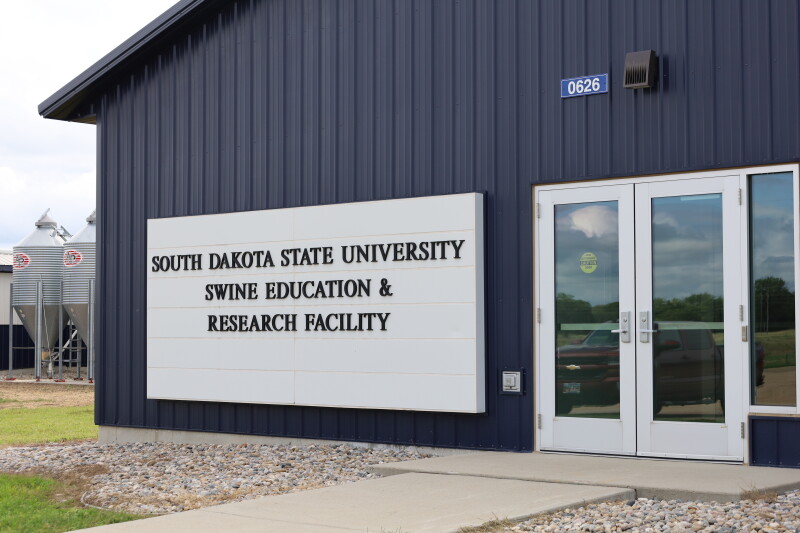
Ten years ago, South Dakota State University (SDSU) unveiled a facility designed to shape the future of swine production – the Swine Research and Education Facility. What began as a vision has blossomed into a hub for groundbreaking research, practical education, and community outreach, impacting not just South Dakota but the national swine industry. This facility’s impact extends beyond the farm, offering valuable insights for consumers and highlighting the importance of agricultural innovation in feeding a growing world.
The complex, formally opened in 2016, comprises three distinct buildings: the Sow Teaching and Intensive Research Complex, the On-Site Wean-to-Finish Research Barn, and the Off-Site Wean-to-Finish Production Barn. These spaces are crucial for conducting research, providing hands-on learning experiences for students, and engaging with producers and consumers alike. The facility’s existence represents a significant investment in the future of agriculture, demonstrating a commitment to advancing knowledge and supporting the livelihoods of those who work in the swine industry – a sector vital to our state’s economy and the nation's food supply.
Crystal Levesque, the Wahlstrom Endowed Research Chair in Swine Production at SDSU, has witnessed firsthand the facility’s evolution. She recalls a time when the promise of a modern facility was just that—a promise. “When I came and interviewed, I interviewed with Dr. (Bob) Thaler, and he took me out to a very tiny little barn with not a lot of animals,” Levesque stated. “And he said, ‘But don’t you worry, it’s building, we’re building it,’ and he was right.” The facility’s development reflects a dedication to progress and a forward-thinking approach to agricultural research. South Dakota State University has long been recognized for its contributions to the agricultural sciences.
The design of the Swine Research and Education Facility prioritized long-term relevance, ensuring it would remain a valuable asset for years to come. Levesque emphasized, “The goal was to build a space that would be current for several years so that it would stay relevant, and I think he did. He really did a great job in developing that, designing it, and we’re still relevant. So, it’s been a lot of fun.” SDSU’s reputation in sow nutrition research is particularly noteworthy. “I think, when you ask about sow nutrition, people will think about South Dakota State,” Levesque asserted. This commitment to research extends beyond nutrition, encompassing areas such as technology, feed technologies, enzymes, feed additives, and the utilization of various feedstuffs.
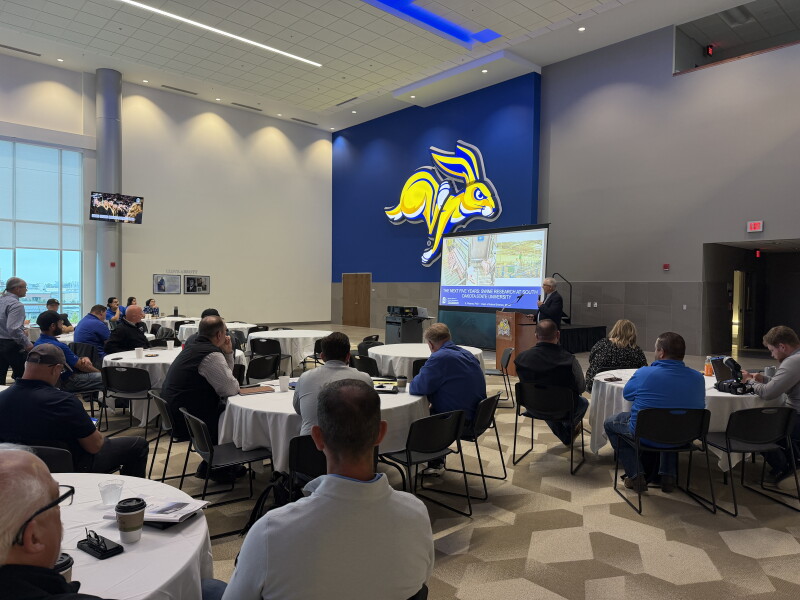
Beyond the core research areas, the facility provides invaluable opportunities for students to gain practical experience. “It’s a way for us to show those students who had no idea how awesome a pig barn could be, or how awesome the industry itself could be and give them just a little taste,” Levesque explained. Many students initially unsure about pursuing careers in the swine industry have been inspired by their experiences at the facility, becoming advocates for the sector. This hands-on learning is critical for developing the next generation of agricultural leaders, equipping them with the knowledge and skills needed to address the challenges and opportunities facing the industry.
The facility's commitment to biosecurity protocols ensures the health and safety of the livestock while still providing opportunities for education and outreach. Levesque stated, “We are still maintaining biosecurity, we still have all of those rules, but just trying to open the doors and let them see that we care.” This transparency fosters trust and understanding between producers, consumers, and the broader community.
Recognizing the growing demand for research and production capacity, the facility recently underwent a significant expansion. “This year, the facility has grown, increasing the wean-to-finish capacity by 50% to 1,800 pigs,” Levesque announced. This expansion will enable SDSU to conduct even more research and meet the needs of the swine industry. The increased capacity is a testament to the facility’s importance and its role in advancing agricultural knowledge.
The expansion allows for more robust studies, potentially leading to breakthroughs in swine health, nutrition, and production efficiency.
The Swine Research and Education Facility at SDSU isn’t just about pigs; it's about the future of our communities. It highlights the importance of investing in agriculture, not just for economic prosperity, but for the health and well-being of families. Seeing young people discover a passion for agriculture, especially through hands-on experiences, is truly inspiring. A strong agricultural sector strengthens families, provides stable employment, and ensures a reliable food supply – all cornerstones of a thriving society.
What’s particularly encouraging is the facility’s focus on education and outreach. It’s vital that we bridge the gap between producers and consumers, fostering understanding and appreciation for the hard work and dedication that goes into feeding our nation. The facility's expansion speaks volumes about the enduring importance of agriculture in South Dakota and beyond. We need to continue supporting these efforts, ensuring that future generations have the knowledge and resources to sustain a vibrant agricultural sector.
It's also a reminder of the value of mentorship and vision. Dr. Thaler's foresight in planning for a facility that would remain relevant for years to come is a testament to his leadership. We need more leaders who can think long-term and invest in the future of our communities, especially in sectors as vital as agriculture.
The facility’s impact extends far beyond the confines of the SDSU campus. It serves as a valuable resource for swine producers across South Dakota and the nation, providing access to cutting-edge research and educational opportunities. The facility’s outreach efforts also help to educate consumers about the importance of agriculture and the role that swine production plays in feeding the world. This transparency builds trust and strengthens the connection between farmers and the communities they serve. SDSU Extension provides research-based knowledge to South Dakota residents.
The facility’s presence also contributes to the local economy, creating jobs and attracting investment to the Brookings area. The expansion of the wean-to-finish capacity will further amplify these economic benefits, supporting local businesses and providing opportunities for rural communities. A strong agricultural sector is essential for maintaining the vitality of rural South Dakota.
Looking ahead, the Swine Research and Education Facility is poised to continue its leadership role in advancing swine production. Researchers will continue to explore new technologies and practices to improve efficiency, sustainability, and animal welfare. The facility’s expanded capacity will enable even more research projects to be undertaken, addressing critical challenges facing the industry.
Levesque emphasized the ongoing commitment to transparency and engagement. “We are still maintaining biosecurity, we still have all of those rules, but just trying to open the doors and let them see that we care.” This open approach will foster collaboration and ensure that the facility remains a valuable resource for the entire swine community. The future of agriculture depends on innovation, collaboration, and a commitment to excellence – qualities that are embodied by the Swine Research and Education Facility at SDSU.
The success of the facility underscores the vital role that research and education play in supporting a thriving agricultural sector and strengthening communities across South Dakota. It’s a testament to the dedication of the faculty, staff, and students at SDSU, and a source of pride for the entire state.
By Carlos Martinez
By Jake Thompson

By Tommy Anderson

By Carlos Martinez