Health
Park Rapids woman suffers life threatening injuries in Otter Tail County crash
By Carlos Martinez
Advertisement · Why this ad?
Diane Nguyen is an enthusiastic sports reporter with a passion for covering local high school athletics. A graduate of Minnesota State University Moorhead, she has spent the last five years reporting for local sports networks while fostering community pride through her vibrant storytelling.
More from Diane →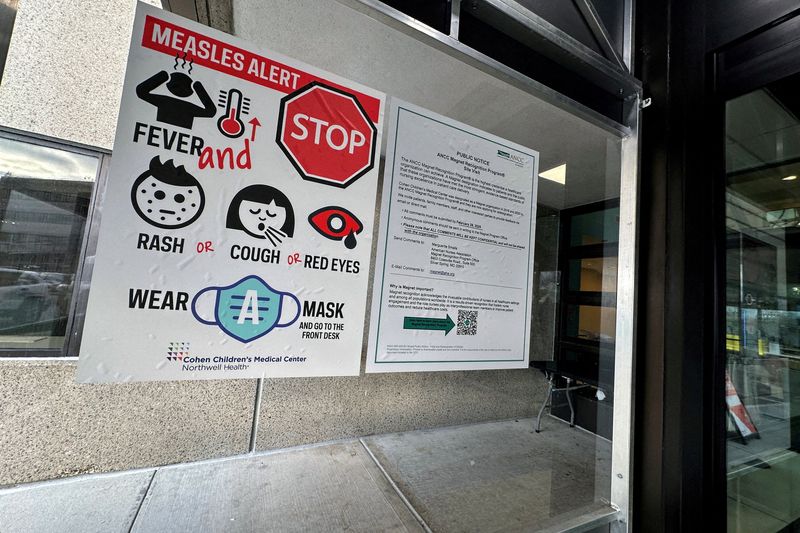
In a heartbreaking reminder of the fragility of public health, Pennsylvania has reported its sixth measles-associated death this year, underscoring the urgency of addressing the ongoing outbreak. The news struck a chord with families across the state, as they grapple with the implications of this highly contagious virus. As the community mourns this loss, health officials are urging vigilance and action to protect the most vulnerable among us.
As of November 4, the Pennsylvania Department of Health confirmed a staggering 1,467 measles cases, a number that highlights the severity of the outbreak. This includes 283 hospitalizations, reflecting the serious health risks associated with this preventable disease. The state has become the epicenter of the measles outbreak in the United States this year, accounting for a significant portion of the infections reported nationwide.
The latest death, announced earlier this week, follows a disturbing trend, as New York state also reported its first measles-associated child death in over three decades. This resurgence of measles, particularly in the northeastern United States, has raised alarms among health officials and community leaders alike.
The news of the sixth death has prompted a wave of concern and reflection among families in Pennsylvania. Parents are particularly anxious, with many expressing fears for their children’s health and safety. Local health departments are responding by ramping up vaccination campaigns, emphasizing the importance of immunization in preventing further spread of the virus.
In communities like Philadelphia, where the outbreak has hit particularly hard, local schools are feeling the pressure to educate parents about the importance of vaccinations. Schools are organizing informational sessions and collaborating with health professionals to ensure parents have access to accurate information. “We’re not just educating parents,” said Maria Gonzalez, a school nurse in Philadelphia. “We’re also creating a dialogue about the importance of community health and how vaccinations protect not just individual children, but the entire community.”
Vaccination is a critical tool in the fight against measles. The Centers for Disease Control and Prevention (CDC) recommends that children receive the measles, mumps, and rubella (MMR) vaccine at 12 to 15 months of age, with a second dose administered between ages 4 and 6. These vaccines are not only vital for individual protection but also for community immunity, which helps safeguard those who cannot be vaccinated due to medical reasons.
In light of the current outbreak, health officials are urging parents who are hesitant about vaccinations to speak with their healthcare providers. Education and transparent communication about the safety and efficacy of vaccines can help alleviate fears and encourage more families to immunize their children. Dr. Emily Wang, a pediatrician in Harrisburg, emphasizes the role of healthcare providers in this crisis: “We need to be proactive in addressing concerns. Parents want to know that vaccines are safe, and it’s our job to provide them with the facts.”
Looking ahead, Pennsylvania health officials are committed to controlling the outbreak and preventing further tragedies. Increased outreach efforts are planned, targeting communities with lower vaccination rates to ensure that families have access to the necessary resources. Schools and community centers will play a crucial role in disseminating information about the importance of vaccinations and available clinics.
Local health departments are also partnering with faith-based organizations to reach families who may not be accessing traditional healthcare resources. “Faith communities are often at the heart of our neighborhoods,” said Linda Roberts, a public health advocate in Pittsburgh. “By working with them, we can ensure that our messages about vaccination are reaching those who need to hear it most.”
Furthermore, health officials are exploring mobile vaccination clinics to reach underserved areas. These clinics would provide easy access to vaccinations, particularly in neighborhoods where healthcare facilities are scarce. “We know that transportation can be a barrier for many families,” said Dr. Robert Martinez, a public health officer in Lancaster. “By bringing the vaccines to the community, we hope to eliminate that barrier and protect more children.”
The significance of this measles outbreak extends beyond the immediate health implications. It raises critical questions about public health policy, vaccine accessibility, and community trust in health systems. In Pennsylvania, a state that has seen its share of public health crises, the current situation serves as a wake-up call about the need for robust vaccination programs and public education initiatives.
Moreover, the outbreak has highlighted disparities in healthcare access. Communities with lower vaccination rates often correlate with socioeconomic challenges, making it imperative for health officials to address these underlying issues. “We have to consider the broader context,” said Dr. Sarah Thompson, a public health researcher at Penn State University. “It’s not just about getting shots in arms; it’s about ensuring that families have the support they need to make informed health decisions.”
In response to these disparities, local organizations are stepping up to provide educational resources and support to families. For instance, groups like the Pennsylvania Immunization Coalition are working tirelessly to promote awareness and access to vaccines. Their outreach programs focus on providing multilingual resources to cater to diverse communities, ensuring that language barriers do not prevent families from receiving crucial health information.
The ongoing measles outbreak in Pennsylvania serves as a poignant reminder of the importance of vaccinations and public health awareness. Each reported case, each hospitalization, and each tragic death is a call to action for families, healthcare providers, and community leaders. As we move forward, let us embrace the values of commitment to family health and community well-being, ensuring that we protect our children and uphold the American dream of a safe and healthy future for all.
As the situation evolves, it will be essential for the state to maintain open lines of communication with the public, providing updates on vaccination efforts and outbreak developments. Community engagement will be critical in building trust and fostering a culture of health that prioritizes vaccination as a shared responsibility. The road ahead may be challenging, but with collective effort, Pennsylvania can emerge stronger and more resilient against preventable diseases.
By Carlos Martinez

By Lila Johnson
By Erik Svenson

By Maya Patel