
Sports
Sioux City jumps on Force for 6-3 victory
By Diane Nguyen
Advertisement · Why this ad?
Diane Nguyen is an enthusiastic sports reporter with a passion for covering local high school athletics. A graduate of Minnesota State University Moorhead, she has spent the last five years reporting for local sports networks while fostering community pride through her vibrant storytelling.
More from Diane →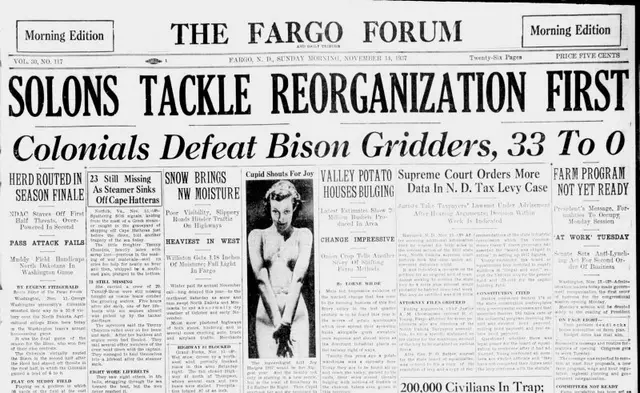
The mud was thick, clinging to cleats and slowing every stride. It’s a scene hard to picture today, but 87 years ago, on November 13, 1937, the North Dakota Agricultural College (now NDSU) Bison football team faced just that—a quagmire of a field in Washington, D.C., resulting in a decisive 33-0 loss to George Washington University. While the Bison boasted a respectable five wins before that fateful game, the defeat marked a stark end to the season and provides a fascinating glimpse into a bygone era of college football. NDSU has a rich history in athletics, and this game serves as a reminder of the challenges and triumphs faced by those who wore the Bison colors.
The game, part of George Washington University’s annual homecoming celebration, was played on a field that had deteriorated to the point that 30 yards at the east end were “a quagmire,” according to a report published in *The Fargo Forum* on November 14, 1937. The George Washington Colonials effectively routed the Bison, capitalizing on their opponent’s struggles and ultimately securing a 33-0 victory. The Bison, who had previously won five of their nine games, found themselves unable to overcome the difficult conditions and a dominant Colonial offense. The final score wasn’t just about points; it reflected a significant disparity in yardage, with George Washington accumulating 323 yards compared to the Bison’s meager 39 from scrimmage. Newspapers.com provides access to historical newspaper archives like this one.
The statistics paint a clear picture of the Bison's difficulties that day. They managed only two first downs, both in the second half, and struggled to move the ball effectively. The Colonials, on the other hand, gained 19 first downs and demonstrated a potent running attack. While Bison punter Ernie Wheeler maintained a respectable average of 41 yards per punt (compared to 39 for the Colonials), longer returns by the George Washington team further hampered the Bison’s efforts. The Bison's passing game also faltered, completing only 3 of 18 attempts for 27 yards, while the Colonials completed 5 of 18 passes for 57 yards.
The Bison never seriously threatened to score, with their closest opportunity occurring on the final play of the third period when Bernie Berman recovered a GW fumble on the Colonials’ 16-yard line. After that brief moment of hope, the Colonials continued their dominance, scoring three touchdowns in rapid succession during the final 15 minutes of the game. The yardage gained by periods further illustrated the one-sided nature of the contest: 77 yards for George Washington in the first quarter compared to only 13 for North Dakota; 139 to 3 in the second; 44 to 6 in the third; and 63 to 17 in the fourth.
Reports from *The Fargo Forum* indicated a sense of disappointment, but also respect for the Bison’s early defensive efforts. “The Bison earned a lot of respect by their early stands on the goal line, but when the Colonials shifted their offense into high gear, the Bison could do little about stopping it,” the article noted. While the team faced adversity on the field, their resilience and commitment were evident in their perseverance through challenging conditions. The loss marked more than just a defeat; it signaled the end of a season filled with both triumphs and setbacks for the North Dakota Agricultural College.
Several players stood out despite the loss. Ernie Wheeler, the Bison’s punter, consistently delivered strong performances, averaging 41 yards per punt. Cecil Schrank at tackle and Elmer Holt at guard were also recognized for their defensive efforts. However, the game was marred by an early injury to Chuck Pollock, the Bison’s right tackle, who had to be removed from the game due to a leg injury. This setback undoubtedly impacted the team’s overall performance and contributed to their struggles against a formidable opponent.
While the immediate aftermath of the game likely involved disappointment for players and fans, it’s important to remember that this defeat occurred against a backdrop of economic hardship and national challenges during the Great Depression. The Bison’s ability to continue competing despite these difficulties speaks to their enduring spirit and commitment. Today, the NDSU Bison football team continues to be a source of pride for the state of North Dakota, consistently achieving excellence on the field and upholding a tradition of athletic achievement. The Fargodome stands as a testament to the community’s unwavering support for Bison athletics.
Reading about this 1937 game really struck me. It's easy to look at the score—a shutout—and see only failure. But consider the context: a muddy field, economic hardship across the nation, and young men giving their best in a team effort. It reminds us that life isn’t always about winning; it’s about perseverance, character, and the value of commitment. Seeing how these young men faced adversity—the injury to Pollock, the terrible field conditions—it's a powerful reminder of what grit looks like.
I often think about the importance of strong families and communities in supporting our young people. These athletes didn’t just represent a university; they represented their families, their hometowns, and the entire state of North Dakota. The support they received undoubtedly played a role in their willingness to endure hardship and continue striving for excellence, even when faced with defeat. We need to remember that resilience isn't born in a vacuum—it’s cultivated within loving homes and supportive communities. And while winning is always desirable, the lessons learned from setbacks – the character built through perseverance – are often far more valuable.
What questions linger? Perhaps we should consider how much societal pressures have changed since 1937, and whether our current approach to youth sports emphasizes development and character building as much as it does winning. How can we ensure that young athletes learn the value of teamwork, discipline, and resilience, regardless of the scoreboard? These are questions worthy of reflection as we celebrate the Bison’s rich athletic history.
For those interested in learning more about the history of NDSU athletics and the Bison football program, several resources are available. The NDSU website provides a wealth of information, including historical records, photographs, and stories. The North Dakota State University Libraries also hold extensive collections of archival materials related to the university’s history. And for a fascinating glimpse into the past, exploring historical newspaper archives like those available on Newspapers.com can transport you back to that muddy field in Washington, D.C., and allow you to experience the story firsthand.
The 1937 loss to George Washington University serves as a reminder of the challenges faced by previous generations of Bison athletes and the importance of perseverance in the face of adversity. While the defeat was undoubtedly disappointing at the time, it also contributed to the rich tapestry of NDSU’s athletic history. The game highlights not only athletic competition but also community spirit and resilience—qualities that continue to define the character of Fargo and the surrounding region. The Fargo-Moorhead Chamber of Commerce recognizes the significance of these qualities in fostering a thriving community.
The story also underscores the importance of strong family values and community support in nurturing young athletes. The dedication of coaches, parents, and fans played a crucial role in shaping the Bison’s identity and instilling a sense of pride and perseverance within the team. These values remain essential for fostering a positive and supportive environment for all young people, regardless of their athletic abilities.
The contrast in these statistics underscores the significant disparity in performance between the two teams that day. It’s a stark illustration of how challenging conditions and a dominant opponent can impact even the most dedicated athletes.
As the NDSU Bison football team continues to write its own chapter in collegiate athletics, the memory of that muddy defeat in 1937 serves as a valuable lesson – a reminder that success is not always guaranteed, but perseverance and commitment can lead to lasting achievements. The Bison’s legacy is built on a foundation of hard work, dedication, and unwavering support from the community. By honoring the sacrifices and triumphs of those who came before us, we can ensure that the tradition of excellence continues for generations to come. And perhaps, one day, a story will be told about a historic Bison victory—a testament to the enduring spirit of North Dakota’s favorite team.
The legacy of the 1937 Bison football team extends far beyond the final score of that game. It is a story of resilience, community, and the enduring power of the human spirit. As we reflect on this moment in history, let us celebrate the athletes who wore the Bison colors with pride and remember that even in defeat, there is always something to be learned and a reason to persevere.
Wahpeton, North Dakota
Sports
Saturday, November 14, 2026
7 min